Returns are the part of retail nobody models
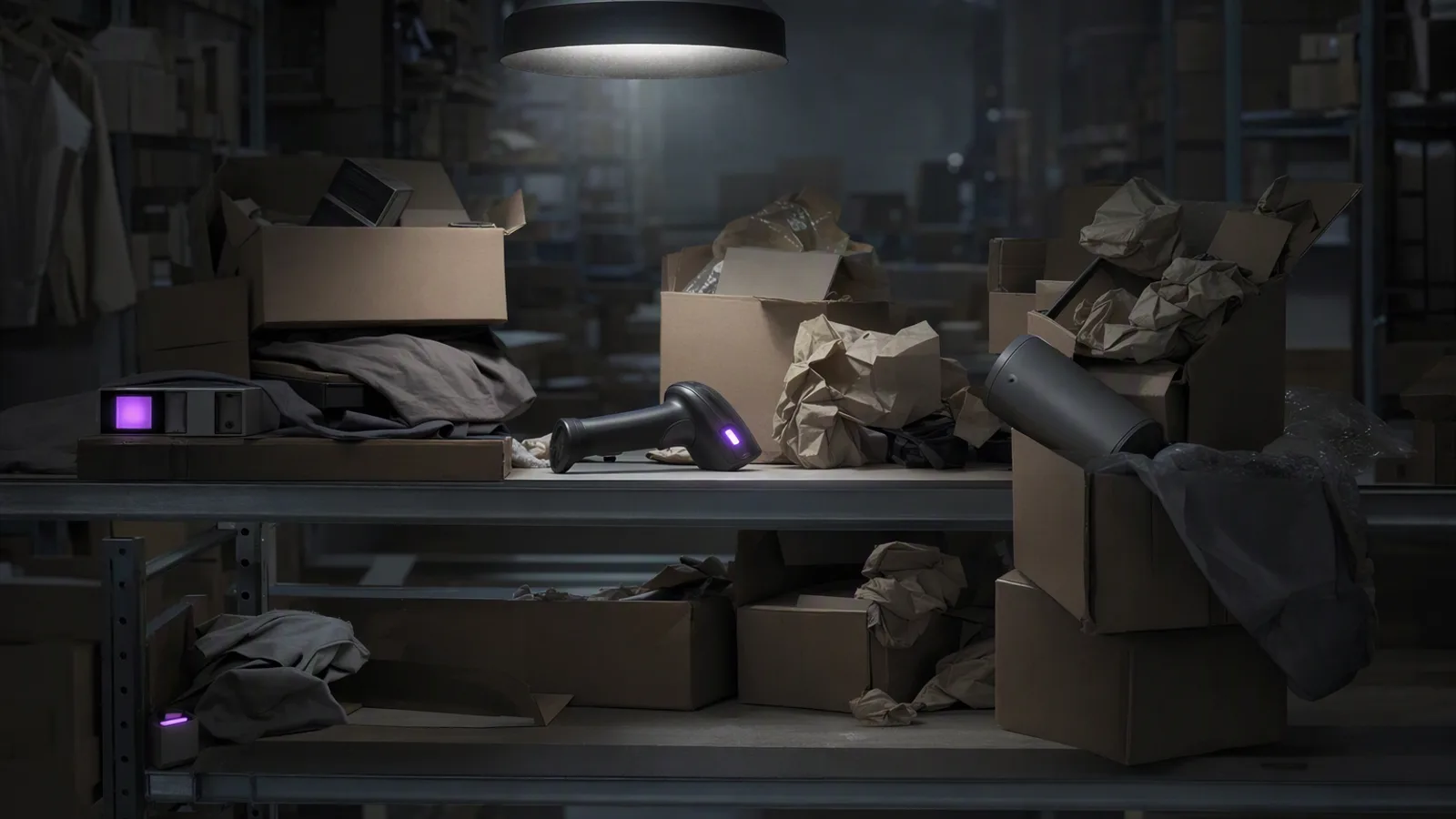
Retail software is built around a flow: order, pick, pack, ship, invoice. It is well modelled, well instrumented and well understood. Then something comes back, and the same business runs on a spreadsheet, an email thread and a shelf in the back that everybody calls the returns shelf.
This is odd, because returns are not an edge case. In several categories they are a large and predictable fraction of everything sold, and they touch more systems than the original sale did.
Why they are harder than sales
The state space is larger. A sale has a handful of states. A return has: requested, approved, in transit, received, inspected, restocked, refurbished, scrapped, refunded, partially refunded, rejected — and several of those can be true at once for different items in one parcel.
Stock is in limbo. Between received and inspected, goods exist physically and are not sellable. Systems that model only sellable and not-present have no place to put them, so they go somewhere invented.
Money and goods move separately. The refund and the physical return happen at different times, sometimes in different directions, and reconciling them is manual in most businesses.
Reasons are unstructured. The reason for a return is the most commercially valuable data a retailer generates and it is usually free text, entered inconsistently, and never analysed.
They arrive unannounced. A parcel appears with a note or nothing at all, and somebody has to work out which order it belongs to.
What it costs when it is not modelled
Stock accuracy degrades. Every unit in limbo is a unit the system is wrong about, and returns volume therefore directly reduces how much you can trust your own numbers.
The customer record lies. A customer who bought six things and returned four is not a customer who bought six things. Systems that only count sales describe a different person from the one you have.
The reason never gets used. If eleven per cent of one product comes back because the sizing is wrong, that is a fixable problem worth more than most marketing. Unstructured, it is invisible.
Refurbishment does not happen. Goods that could be resold get scrapped or sit on the shelf, because there is no state that says checked, fine, sell again at this price.
What modelling them properly looks like
Returns as first-class objects. Linked to the original order, with their own states, their own timeline and their own costs.
Explicit limbo. Received-not-inspected as a real state with a real quantity, so the sellable figure stays honest.
Structured reasons. A short controlled list rather than free text, with a free-text field alongside for the thing the list did not anticipate.
Costs attached. Shipping back, inspection time, refurbishment, write-off. This is how you find out which products are unprofitable despite selling well.
Visible in the customer record. Not as a judgement about the customer but as an accurate description of the relationship.
Why it comes before anything clever
Returns are the fastest way to find out whether a retail system is honest. A system that models sales beautifully and returns as an afterthought will drift out of accuracy at exactly the rate your returns rate demands.
And in a world where something might one day be buying on a customer’s behalf, at speed, with imperfect judgement, the returns path stops being the unglamorous back end and becomes the part under the most pressure.
- returns
- reverse logistics
- stock
- customer record