The order that arrives by email
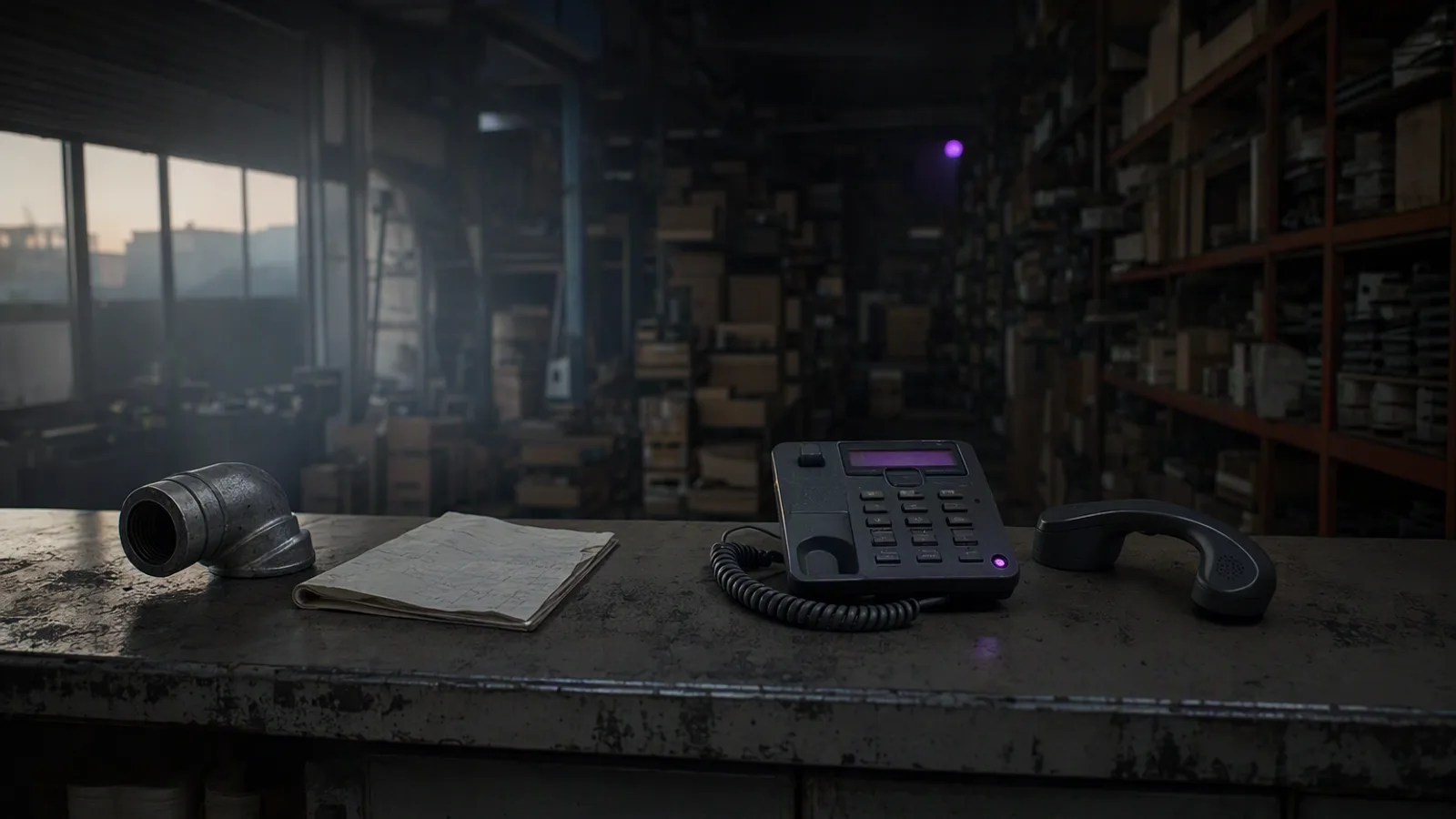
Monday morning at a wholesaler. An email with a spreadsheet attached, in the customer’s own format and with the customer’s own product codes. A phone call from a regular who wants “the same as last time, but double the fixings”. A photo of a handwritten list, sent by a sales rep from a customer’s site. An order through the B2B portal. Someone at the counter with a part in their hand, asking for another one like it.
Only one of those arrives in a form the software was designed for. The rest are retyped, by a person, into a system that assumes the customer clicked through a checkout.
There is a lot of talk about a future customer who will not use a browser. In wholesale, plenty of customers never did.
Why wholesale is not e-commerce with bigger baskets
Prices belong to the customer. Contract prices, price groups, volume discounts, a price agreed on the phone last spring. The question is never just what this costs, but what it costs for them.
The order is a conversation. A quote, changes, a partial confirmation, an item swapped for an equivalent. The final order is the end of an exchange rather than a single submission.
Delivery is partial by default. Ship what is in stock today and the rest when it arrives. Backorders are a normal state, not a failure.
The customer is a company. Several buyers, an accounts department, more than one delivery address, payment terms and sometimes a credit limit. A model built around one person with an email address does not fit.
Units are not obvious. A box, a pack of ten, a pallet, a metre. The customer orders in one unit, the warehouse counts in another, and retyping is where the two get confused.
Repeat orders are the backbone. The same customer and the same products every few weeks, and the knowledge of what “last time” means sits with whoever usually takes their calls.
What retyping costs
Errors. The customer’s code mapped to the wrong product, a box read as a piece, a line missed on page two of a PDF. Each one turns into a correction, a return or a credit note.
Delay. The order exists in an inbox for hours before it exists in the system, and stock that should have been reserved for it is sold to someone else in the meantime.
Lost demand. When a customer asks for something you do not have, the question is answered and forgotten. Nobody records what was asked for and not sold, so purchasing never sees it.
Dependence on people. The colleague who knows what each customer means is the system. When they are on holiday, so is the knowledge.
What it would take
One order record whatever the channel. Email, phone, portal, counter and shop all ending up as the same kind of order, with the same stock and the same history, rather than one system per channel and a spreadsheet to reconcile them.
The customer’s language mapped to yours. Their codes, their names for things and their units, recorded once and reused, so that the next email needs checking rather than retyping.
Backorders and partial deliveries as real states. What was promised, what has shipped and what is still to come, visible to the customer and to the warehouse alike.
Product knowledge where the phone is answered. What fits what, what replaces a discontinued item, what the equivalent from another supplier is. If that lives in one person’s head, every phone order depends on them.
The same problem, one step further
A customer’s purchasing system sending orders automatically, or something buying on a buyer’s behalf, is the same problem as the email with a spreadsheet: an order in someone else’s format, asking about your stock and their prices.
A wholesaler who can turn that email into a correct order without retyping is most of the way to being ready for an order with no person behind it. One who cannot will simply add another retyping step, this time for a customer that never phones to check.
- wholesale
- B2B
- order management
- channels